Cart5items

Cart

Vehicle filter
Reset

Description

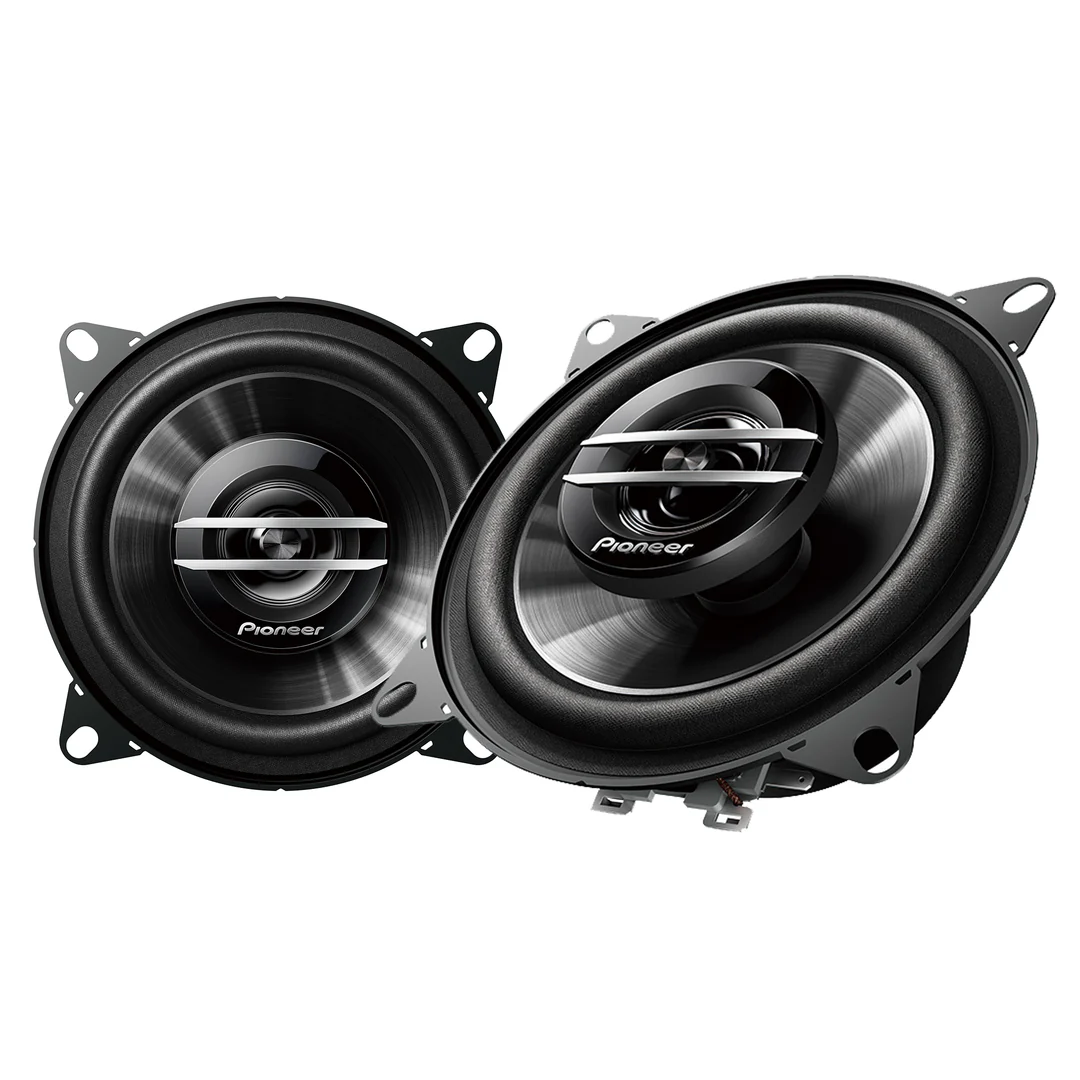
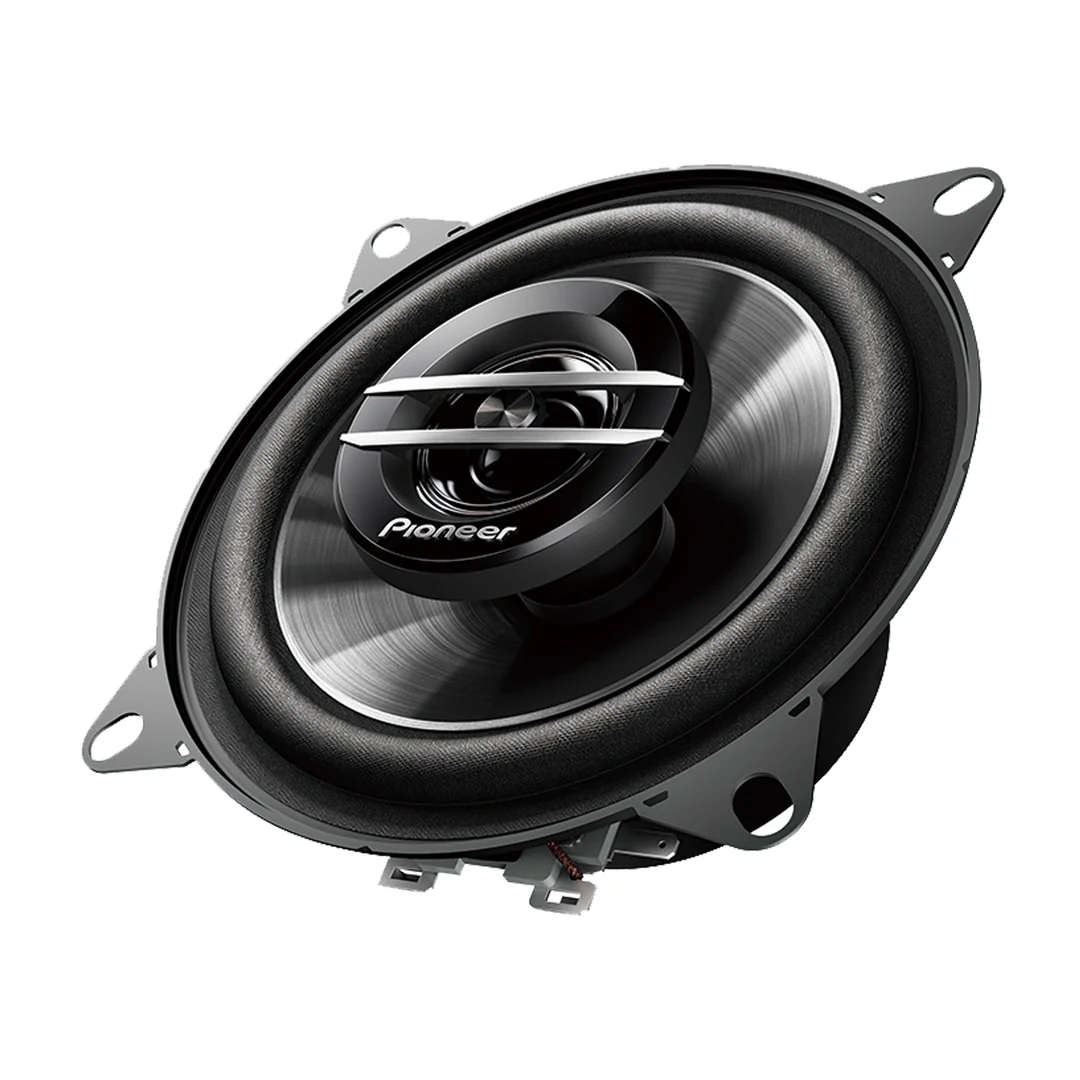
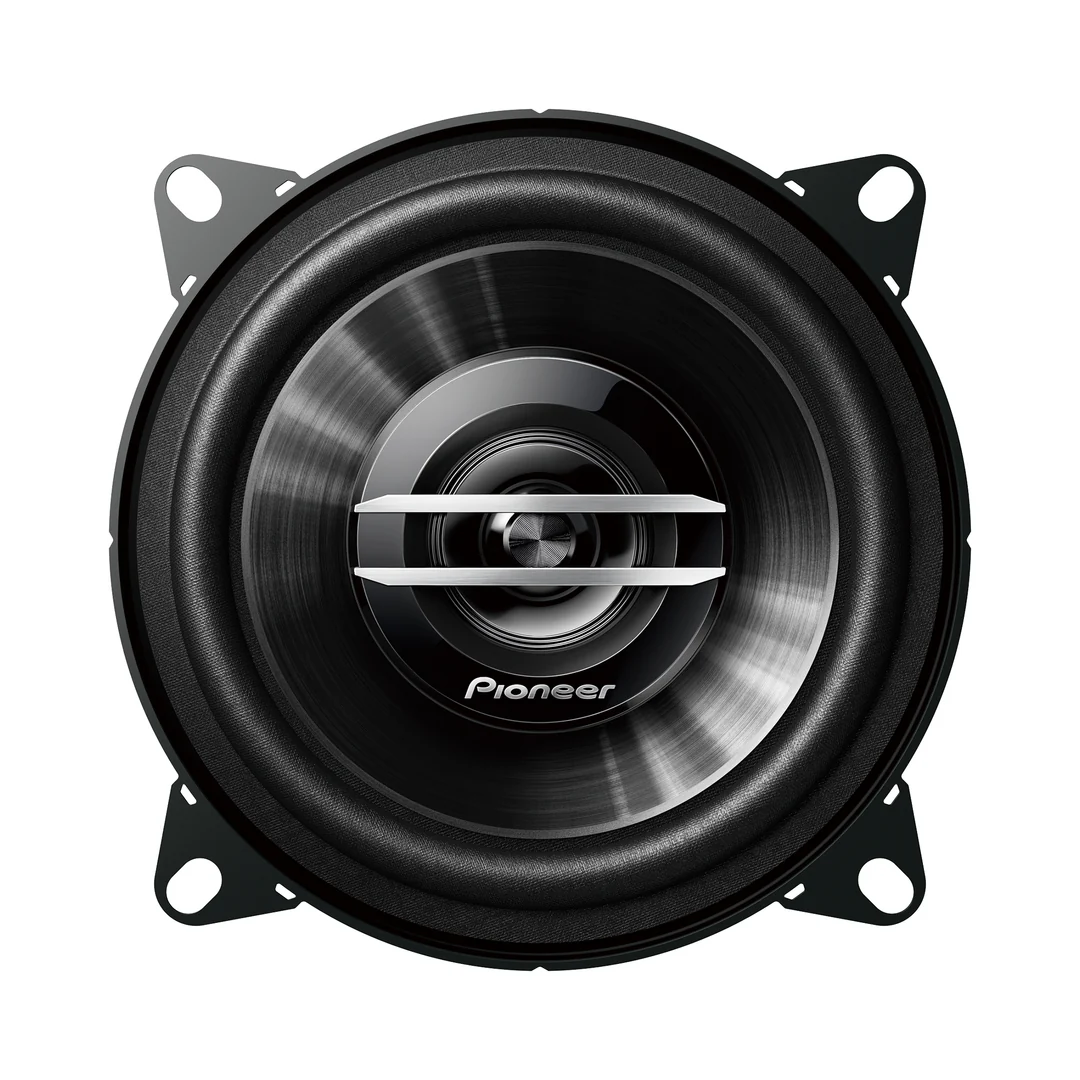
Pioneer TS‑G1020S

The Pioneer TS‑G1020S is a compact 4‑inch (≈10 cm) 2‑way coaxial speaker pair from the G‑Series, designed to provide a meaningful sound upgrade in tight vehicle mounting spaces. It handles up to 210 W maximum power and has a nominal rating of 30 W RMS, with an impedance of 4 ohms.  The speaker features a mica‑reinforced IMPP™ composite cone for improved rigidity and clarity, a 30 mm tweeter delivering crisp high frequencies, and a frequency response spanning approximately 35 Hz to 27 kHz.


Specifications

Product Performance
Specification Value
Continuous Power Handling (RMS) 30 W
Maximum Peak Power Handling 210 W
Nominal Impedance 4 Ω
Sensitivity (1W/1m) 87 dB
Frequency Response 35 Hz – 27 kHz
System Type Coaxial 2-way, Balance Dome Tweeter

Features
Specification Value
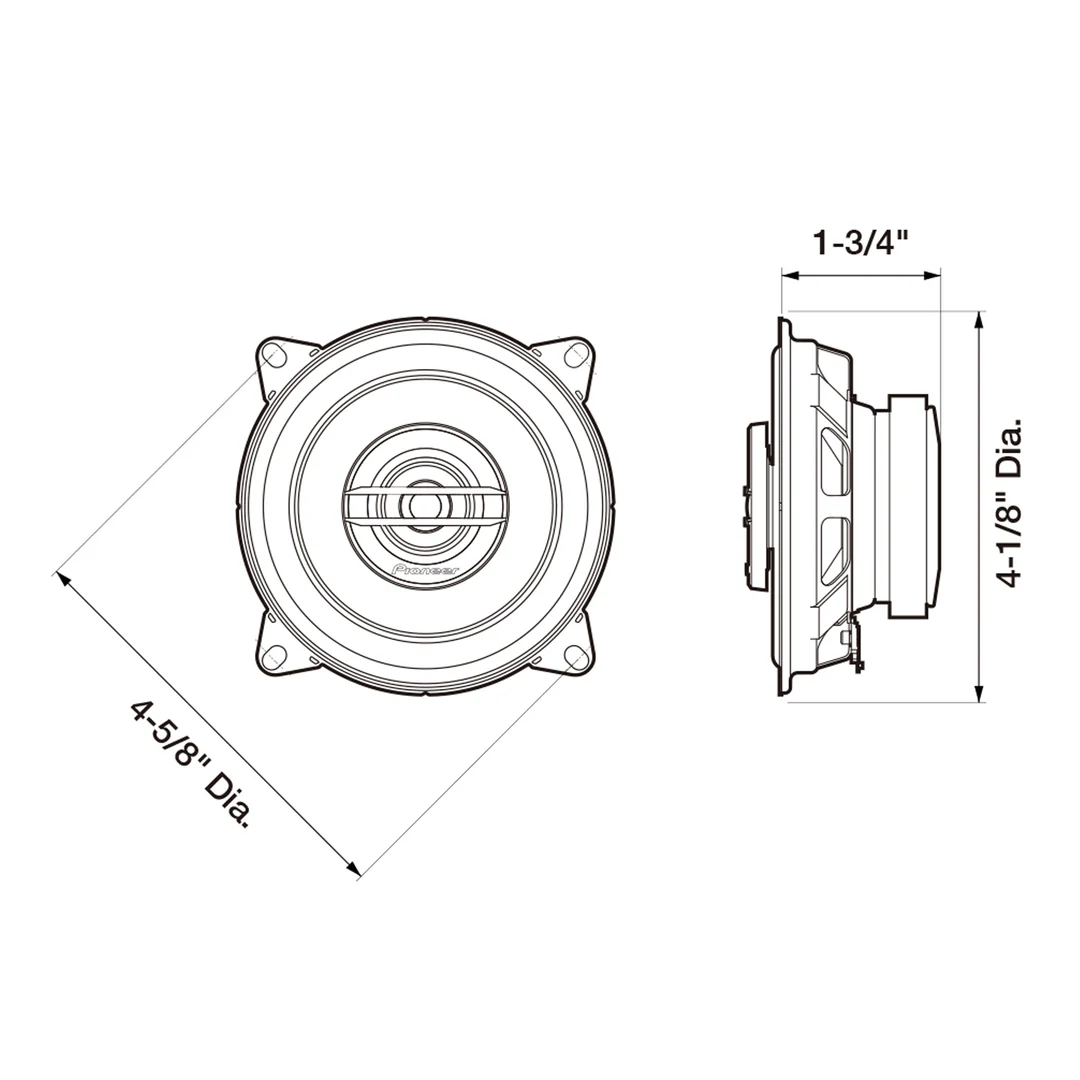
Cut Out Dimensions 4-1/8″
Mounting Depth 1-3/4″
Tweeter Dimensions 1.19″
Woofer Dimensions 4″

Materials
Specification Value
Basket Material Metal
Cone Material IMPP with MICA
Damper Poly cotton
Diaphragm Material Polyethylene terephthalate (PET) – Tweeter
Magnet Material Ferrite
Magnet Weight 3.9 oz
Shorting Ring Material Copper
Surround Material Rubber Coated Cloth
Surround Type Rolled
Voice Coil Material Kapton
Voice Coil Wire Copper
Wire Terminals Lug Type


About The Product 

TS-G1020S 4.0″ Two-Way Speaker

The TS-G1020S 4.0″ two-way speaker features 210 W max power (30 W nominal) and Pioneer’s extremely strong, lightweight Injected Molded Polypropylene (IMPP™) cone for improved sensitivity and reduced distortion. The Conex damper delivers higher power handling and deeper bass, while the 25 mm balanced dome tweeter reproduces highs with excellent performance and musicality. Shallow mounting depth allows easy installation in a wide variety of vehicles.

Affordable & Reliable OEM Speaker Replacement

Ideal for replacing factory speakers, these two-way speakers feature an IMPP™ with MICA composite cone woofer for high sensitivity and low distortion. The Conex damper enhances power handling and bass depth, while the balanced dome tweeter delivers clear and musical highs. Shallow mounting depth ensures convenient installation.


Mica Reinforced IMPP™ Cone

The extremely rigid yet lightweight cone prevents distortion and failure under high power. Pioneer’s IMPP™ composite cones, enhanced with mica, achieve an optimal rigidity-to-weight ratio and resonance across the audio bandwidth, ensuring balanced sound reproduction.


PET Hard Dome Tweeter

The PET (Polyethylene Terephthalate) dome maintains stable electrical and mechanical properties across a wide frequency range. Its strength-to-weight ratio is ideal for high-frequency vibrations. A front diffuser ensures balanced audio from on-axis to off-axis listening points in the car.


Pioneer Exclusive P.F.S.S. Spider

The Progressive Flex Suspension System (P.F.S.S.) supports the voice coil by damping cone vibrations and improving sound linearity. Its soft section ensures smooth movement and clarity under high power, while the firmer section controls excessive vibrations to prevent distortion and maintain musical detail during large bass excursions.


Reviews

There are no reviews yet.

Be the first to review “Pioneer TS‑G1020S”

Your email address will not be published. Required fields are marked *

Questions and Answers

Q1: What is the continuous (RMS) power rating of the TS‑G1020S?
A1: It is rated at approximately 30 W RMS.
Q2: What is the maximum (peak) power handling of the TS‑G1020S?
A2: Up to 210 W maximum power.
Q3: What size are these speakers and why might that matter?
A3: They are a 4‑inch (10 cm) size, useful for vehicles with small speaker mounting spaces where larger speakers may not fit.
Q4: What is the frequency range of the TS‑G1020S?
A4: The frequency response is roughly 35 Hz to 27 kHz.
Q5: Will these speakers work with a factory head unit without an amplifier?
A5: Yes — thanks to their sensitivity (~87 dB) and 4‑ohm impedance, they can work with many factory head units, although an amplifier may improve performance in demanding listening conditions.

Still have questions?

Ask a question